

The Over-Exfoliation Epidemic: 8 Signs You Might Be Damaging Your Skin Barrier
If your skin feels tight, sensitive, or constantly breaking out… you might be over-exfoliating without even realising.
With acids, scrubs and “glow-boosting” routines all over social media, more people are layering active ingredients than ever before. But dermatologists are now seeing a rise in sensitised, reactive skin as a result.
The truth? When it comes to exfoliation, more doesn’t always mean better — and in many cases, it can actually damage your skin barrier.
Here are the signs to look out for.
8 Signs You Might Be Over-Exfoliating Your Skin
1. Persistent Redness
If your skin always looks slightly flushed or irritated, it could be struggling to recover.
What’s happening:
Your skin barrier is weakened, making it more reactive to everything.
2. Stinging When Applying Products
Even your usual moisturiser suddenly feels uncomfortable.
What’s happening:
Your skin is more exposed and sensitive, so products penetrate more deeply — and irritate more easily.
3. Dry, Tight Feeling
That “squeaky clean” feeling? Not a good sign.
What’s happening:
You’ve likely stripped away too much of your skin’s natural oils.
4. More Breakouts, Not Fewer
Ironically, over-exfoliating can trigger more spots.
What’s happening:
A damaged barrier can lead to inflammation and clogged pores.
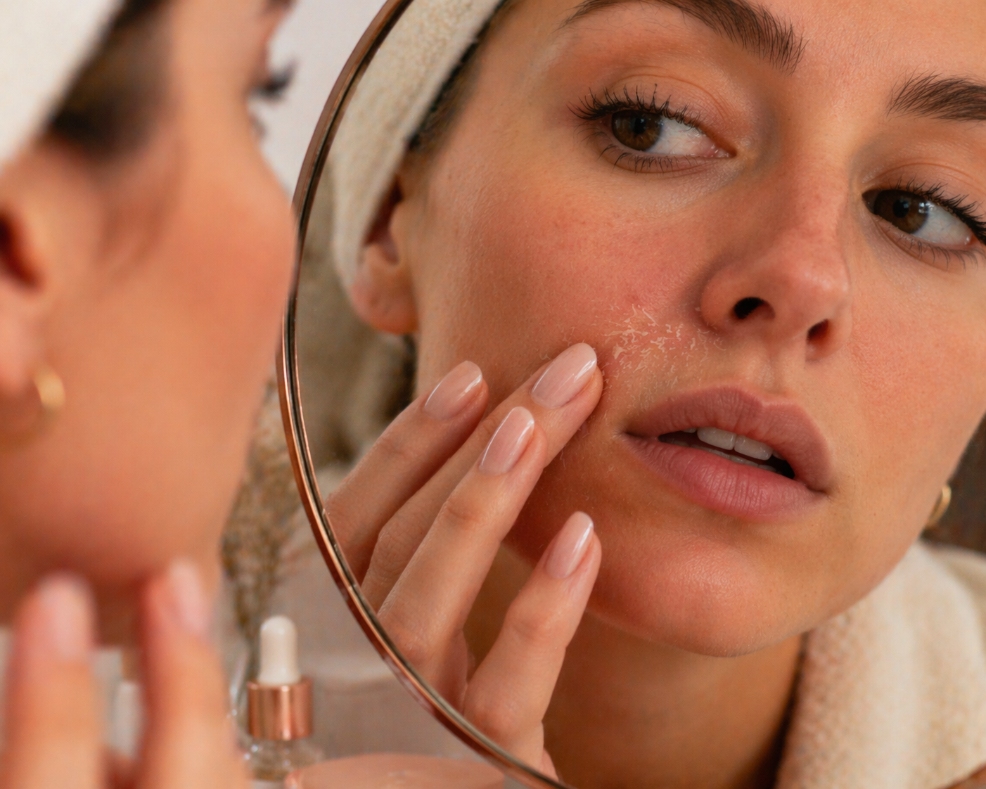
5. Flaky Patches
Especially around the nose, chin or cheeks.
What’s happening:
Your skin is struggling to retain moisture and is shedding unevenly.
6. Shiny but Dehydrated Skin
Your skin looks oily, but feels dry underneath.
What’s happening:
Your skin may be overproducing oil to compensate for moisture loss.
7. Increased Sensitivity to Sunlight
You burn more easily or react to sun exposure.
What’s happening:
Exfoliation makes skin more vulnerable — especially when overdone.
8. Your Products Stop “Working”
Everything suddenly feels less effective.
What’s happening:
A compromised skin barrier can prevent products from working properly.
What to Do If This Sounds Like You
If you’re noticing a few of these signs, don’t panic — your skin can recover.
The key is to simplify and repair:
- Press pause on strong acids and exfoliants
- Focus on hydration and barrier repair (think ceramides, hyaluronic acid, gentle cleansers)
- Stick to the basics: moisturiser + SPF
- Reintroduce actives slowly, and not all at once
Why This Matters
There’s a growing shift in skincare away from aggressive routines and towards protecting the skin barrier.
Because real glow doesn’t come from stripping your skin — it comes from healthy, balanced skin that’s properly supported.
Quick FAQ: Over-Exfoliation Explained
How often should you exfoliate your skin?
For most people, 1–3 times a week is enough. This can vary depending on your skin type and the product you’re using, but daily exfoliation is often too much for many skin types.
Can over-exfoliating cause breakouts?
Yes — it’s a common but overlooked cause. A damaged skin barrier can lead to inflammation, irritation and clogged pores, which can trigger more breakouts.
How long does it take for your skin barrier to repair?
It can take anywhere from a few days to a few weeks, depending on how damaged your skin is. The key is to stop over-exfoliating and focus on gentle, hydrating skincare.
What ingredients help repair the skin barrier?
Look for ingredients like ceramides, hyaluronic acid, niacinamide and glycerin — these help hydrate, soothe and strengthen the skin.
Should you stop exfoliating completely?
Not necessarily — but if your skin is irritated, it’s best to pause exfoliation temporarily and reintroduce it slowly once your skin has recovered.